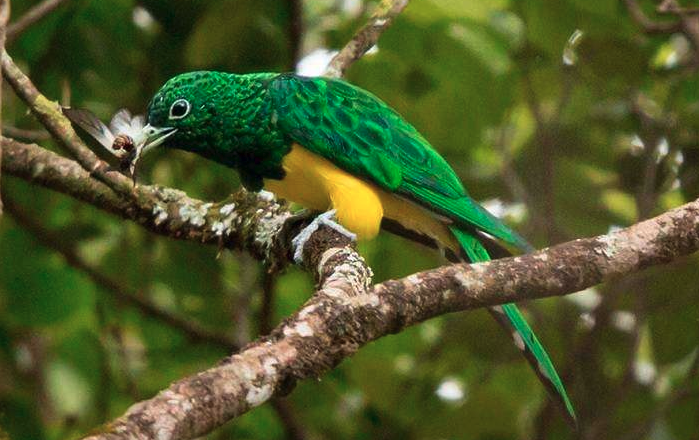
In the hushed stillness of Uganda’s ancient forests, a voice rises, a song that glistens like sunlight on dew. It is the call of the African Emerald Cuckoo (Chrysococcyx cupreus), a bird so radiant it seems born of emerald fire, curved from sunlight and forest mystery. To hear it is to be transported; to see it is to glimpse the spirit of the wild itself. It is a living symbol of resilience and beauty. This journey into Uganda’s forests is not just about birdwatching, it is about discovering a living jewel that embodies the magic of nature. Hearing its call or catching a glimpse of its flickering plumage is like unlockng a secret of the wild.
Habitat
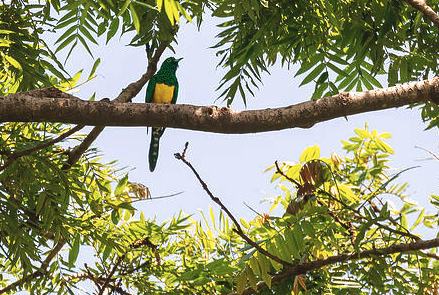
The African Emerald Cuckoo is native to sub-Saharan Africa, thriving in tropical forests, forest edges, and woodlands. In Uganda, it graces the canopies of Mabira Forest, Kibale National Park, Bwindi Impenetrable Forest, Queen Elizabeth National Park, and Semuliki National Park where dense vegetation provides both cover and abundant insect prey.
Physical characteristics
Sexual Dimorphism
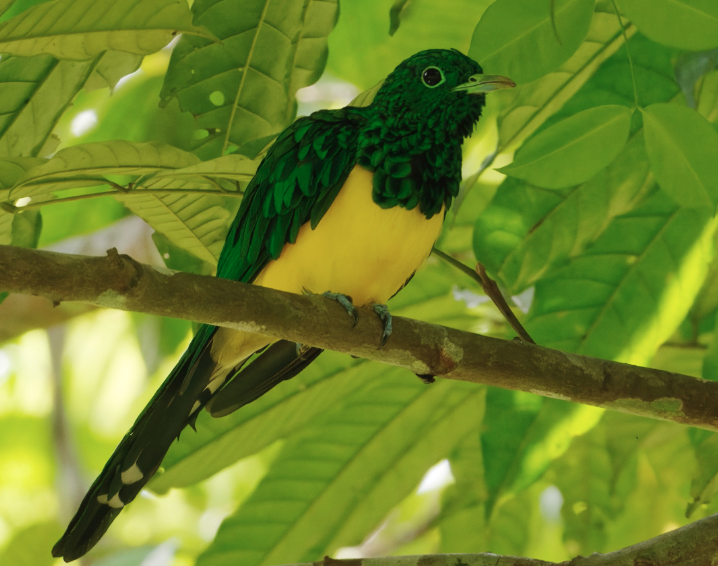
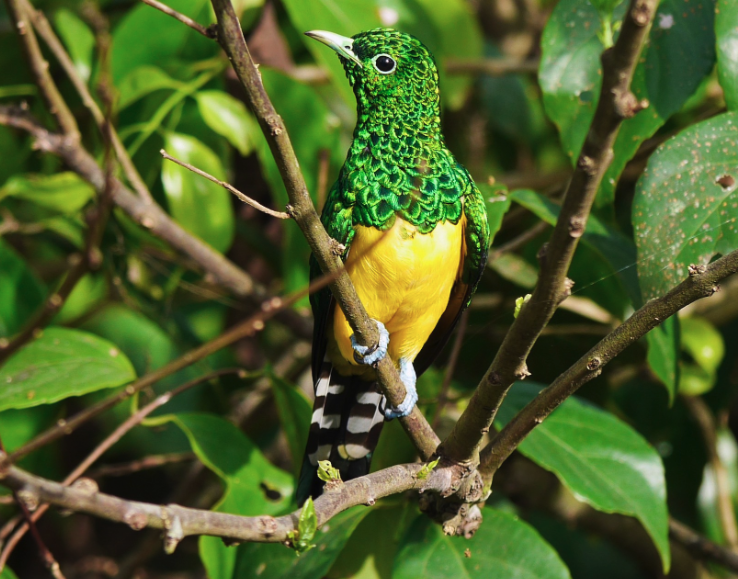
The male has a polychromatic emerald green back, bright yellow breast, and a vivid orange bill, its song echoes through the forest, a whistle that announces presence and attracts mates while the female is more subdued, with green upperparts and barred white-and-brown underparts, blending into the shadows, they focus on finding suitable host nests. Their cryptic plumage helps them blend into foliage, making their parasitic strategy possible.This contrast makes the male a dazzling sight, while the female remains a master of camouflage.
Size and Dimensions
The African Emerald Cuckoo is a small, compact bird, averaging about 20 cm (8 inches) in length from beak to tail, with a streamlined body built for agility in dense forest canopies. It weighs approximately fifty grams, this makes it so light and easily carried by the air itself. It does not labor in flight; she glides, maneuvers, and vanishes with the ease of a forest spirit. It has short, rounded wings which are built for precision, not distance, darting through leaves, weaving between vines, disappearing into shadow before the eye can follow. The tail is moderately long and slightly graduated, acts as a rudder. With each flick, she balances, pivots, and changes direction in an instant, a master of agility in the green labyrinth. To watch her is to witness survival turned into art. It is not just a bird, but a living emerald, sculpted by nature for speed, stealth, and wonder.

Body Structure
The beak is short, sharp, and slightly curved, It is a tool of precision. With it, the bird plucks caterpillars from leaves, swift and exact, leaving no trace of its passing. The eyes are dark and alert, they pierce the shadows. Every flicker of movement, every ripple in the foliage, is caught in that gaze. The cuckoo sees what others miss, a predator cloaked in emerald. The feet have two toes forward and two a the back which grip the branches like iron. This zygodactyl hold anchors the bird in the canopy, steady even as the wind shifts and branches sway

Together, these features form a masterpiece of survival. The African Emerald Cuckoo is not just a bird, it is a hunter sculpted by nature, whose body is a perfect balance of beauty and function.
Adaptations in Structure
The African Emerald Cuckoo moves like a shadow. Its compact body slips effortlessly through thick vegetation, a design of pure stealth and agility. Branches and vines are no barrier, it darts, pivots, and disappears, leaving only a shimmer of green behind. Yet often, it is not the bird that reveals itself first, but its song. From deep within the canopy, the syrinx, the bird’s remarkable vocal organ produces a clear, melodious whistle. The sound carries through the forest, bright and haunting, a call that lingers long after the bird has vanished from sight. To encounter the cuckoo is to witness a paradox: a creature both hidden and heralded. Invisible in the foliage, yet unforgettable in voice, it is like a pearl seen rarely, but heard always.
Social Structure
The cuckoo is solitary and secretive unlike other birds that thrive in flocks, often heard before it is seen. Its melodious call echoes through the canopy, guiding birders to its hidden perch. It spends much of its time perched quietly, scanning for prey or darting swiftly through foliage.
Solitary Existence
The cuckoo does not form tight-knit colonies or pairs that nurture chicks together. Instead, each bird moves independently, feeding, singing, and nesting apart. Males and females meet only briefly during the breeding season, their bond fleeting, their roles sharply divided.
Brood Parasitism
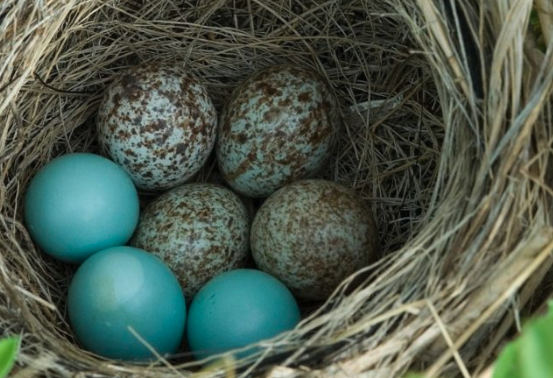
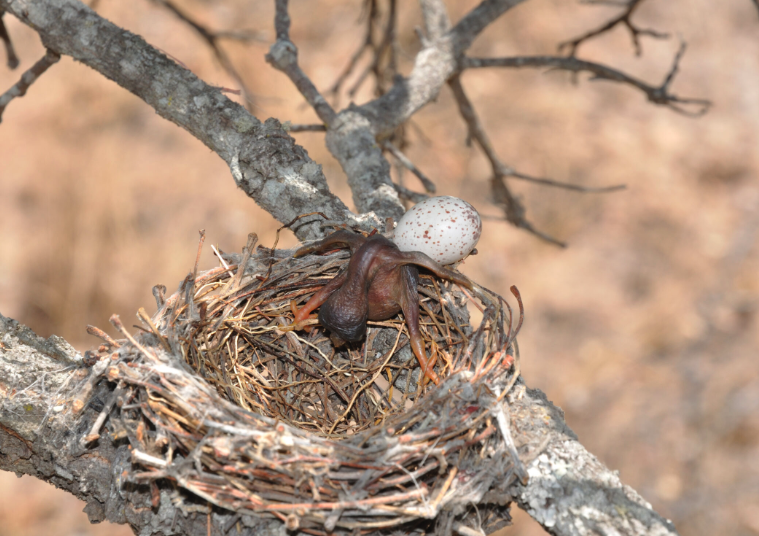
The most dramatic aspect of its social structure is brood parasitism. The female cuckoo does not build her own nest. Instead, she watches carefully for the nests of smaller forest birds often sunbirds, warblers, or robin-chats. With stealth and precision, she lays her egg among theirs. The host bird, unaware of the deception, incubates the cuckoo’s egg and later feeds the chick as if it were its own. The cuckoo chick grows quickly, often outcompeting or even displacing the host’s offspring. In this way, the cuckoo ensures survival without investing in parental care.
Ecological Impact
This unusual social system has ripple effects. Host species must adapt to the cuckoo’s intrusion, sometimes evolving strategies to recognize and reject foreign eggs. The cuckoo, in turn, refines its mimicry, laying eggs that resemble those of its hosts. It is a silent evolutionary arms race, played out in the treetops.

The Drama of Survival
To tourists and birders, this social structure adds a layer of mystery. The cuckoo is rarely seen tending chicks, because it never does. Instead, its survival depends on deception, agility, and song. It is a bird that thrives not through community, but through cunning.
The African Emerald Cuckoo’s social world is one of solitude and strategy, that entrusts its future to others, while it continues to sing, glide, and vanish into the forest.
Gestation, Nursing and Life Span
The African Emerald Cuckoo practices brood parasitism, unlike other birds that build nests and guard their young, this cuckoo follows a different path. The female lays just one egg at a time, never in her own nest. Instead, she slips silently into the nest of another bird often a sunbird or warbler and leaves her single treasure behind. That lone egg is her legacy. She does not return to care for it. The cuckoo’s egg typically hatches in 12–14 days, which is often slightly faster than the host’s own eggs. This early hatching gives the cuckoo chick a head start. It grows quickly, demanding food and attention, often outcompeting or even ejecting the host’s chicks. Using this strategy means the cuckoo lays many eggs (10-12) across different nests during a season, scattering her offspring like whispers through the forest. Each egg is a gamble, entrusted to strangers, yet together they ensure the species survives. No single nest carries her entire brood. Most small cuckoos, including the African Emerald Cuckoo, survive between six and eight years in the wild. These years are not ordinary; they are years of stealth and song.
Diet
The Nutriitional ecology of a cuckoo is dominated by caterpillars and insects, plucked swiftly from leaves with a sharp, curved beak. Each catch is more than a meal, it is balance restored, keeping insect numbers in check and protecting the forest’s fragile greenery. Though it sometimes supplements with fruits and berries, its true calling is as a caterpillar specialist. By consuming what could otherwise overwhelm the foliage, the cuckoo becomes an unseen guardian of the ecosystem. To watch it feed is to see nature’s regulator at work whose survival is intertwined with the health of the forest itself.
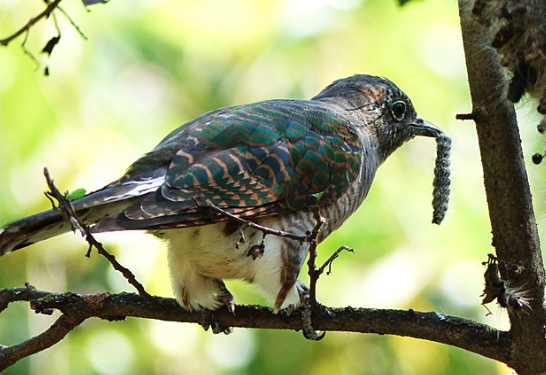
Similar Species
Uganda’s forests host other dazzling cuckoos, including:
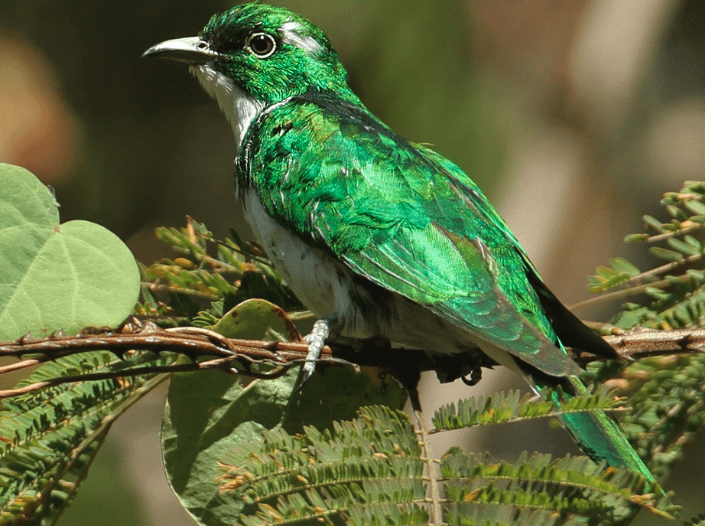
- Klaas’s Cuckoo (Chrysococcyx Klass)– smaller, with similar green plumage and adapted to woodlands unlike the african emerald looks which occupies dense moist forests.
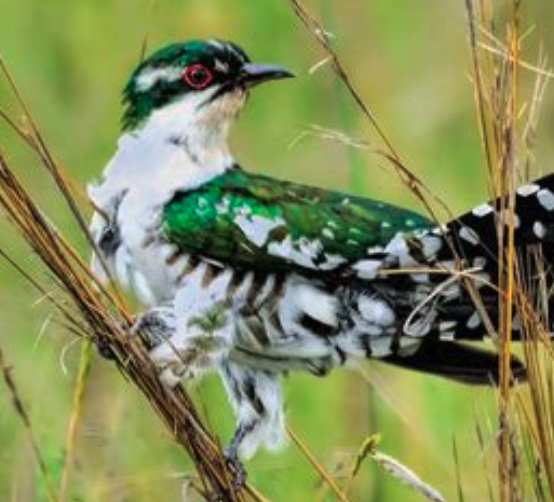
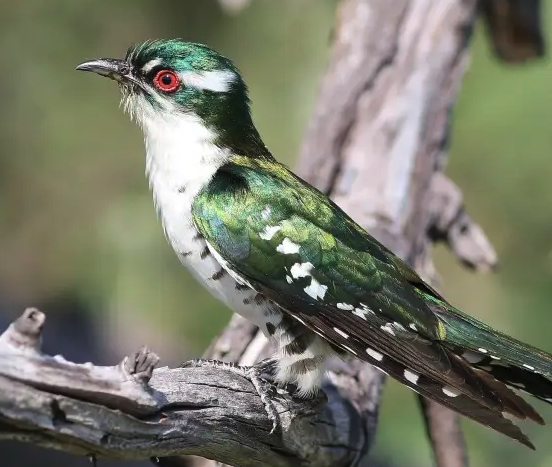
- Diederik Cuckoo (Chrysococcyx caprius) – It is the most noticeable in the cuckoo species, Both sexes have a similar in plumage coloration but females are duller and slightly larger than males.
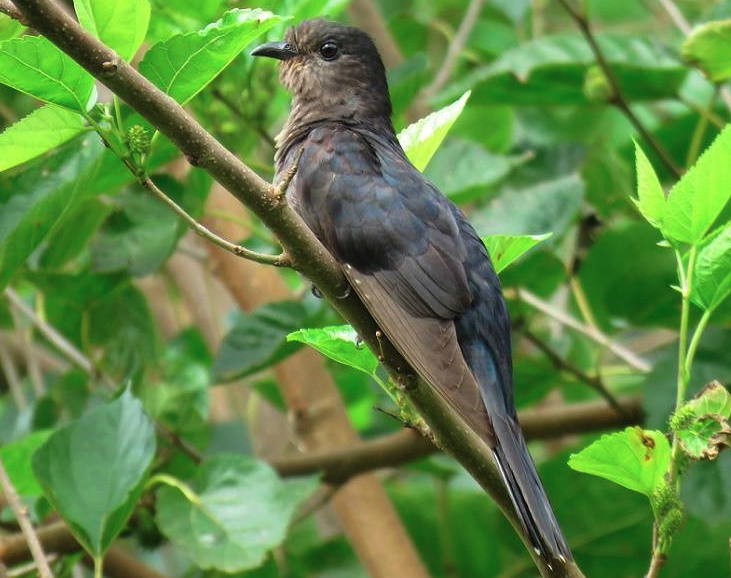
African Black Cuckoo (Cuculus Clamosus) – larger, with different plumage but similar lifestyle.
Threats
Deforestation and habitat loss are the cuckoo’s greatest enemies. Expanding agriculture, logging, and urban growth carve away the green maze where the bird hides and sings. Each fallen tree is not just a loss of cover, but a broken link in the chain of survival. The cuckoo’s population trend is decreasing, according to BirdLife International, despite its wide range across sub-Saharan Africa. Its conservation status remains “Least Concern,” but this masks the quiet erosion of its numbers. There is also the indirect threat of host decline. If the smaller birds it relies on for brood parasitism vanish, the cuckoo’s strategy collapses. Without nests to infiltrate, its emerald legacy fades.
Conclusion
The African Emerald Cuckoo is not just a bird—it is the song of the emerald spirit, echoing through Uganda’s forests. With its shimmering plumage, fascinating breeding strategy, and enchanting call, it offers tourists a glimpse into the mystery and magic of Uganda’s wilderness.
— Sharon Kaima ( Travel consultant, J.T Safaris )