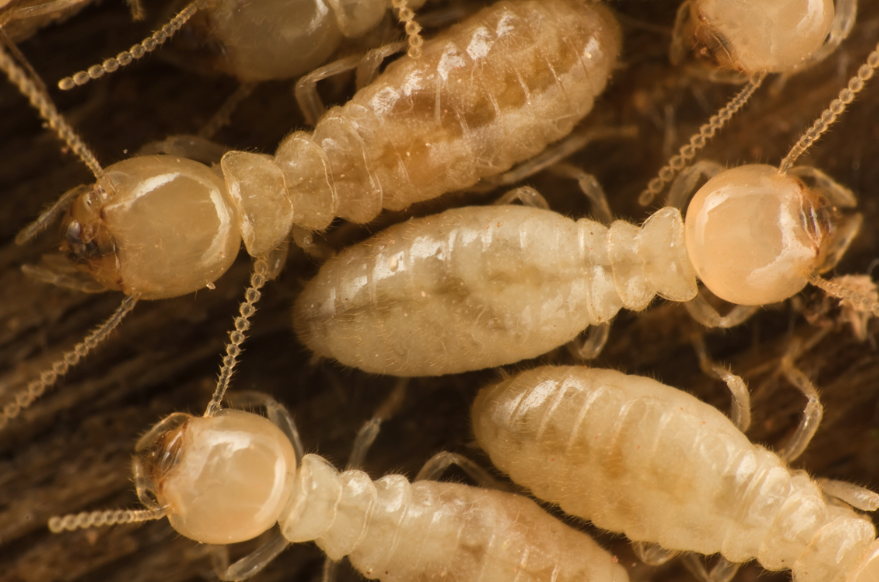
In many parts of Tropical Africa, the arrival of the rainy season is announced not only by dark clouds and the smell of wet earth, but by the sudden appearance of what many people call “white ants”. They emerge in large numbers, fluttering around lights, landing on verandas, roads, and grasslands. Children rush to collect them, elders smile knowingly, and kitchens come alive as the delicacy is prepared. Yet few pause to ask an important question: what exactly are these “white ants”?
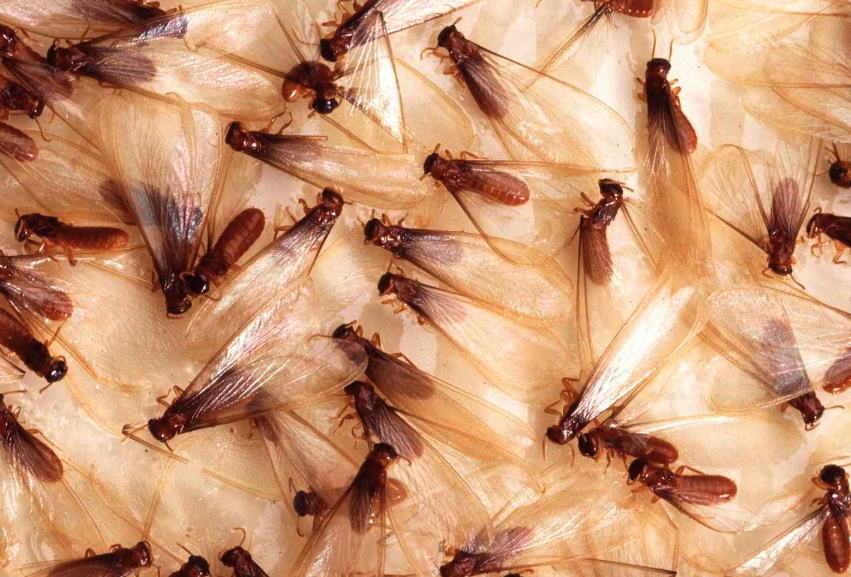
They are not ants at all. They are termites.
Termites are among the most misunderstood insects in Africa. Often blamed for destroying homes, furniture, and crops, they are also quietly responsible for some of the most important ecological processes that sustain life in our landscapes. To understand termites is to understand soil, forests, savannas, and even the survival of many wild animals. For Uganda, a country rich in biodiversity and deeply connected to the land, termites deserve far more respect than they receive.
What Are Termites? (And Why They Are Not Ants)
Termites are social insects belonging to the order Blattodea, which makes them close relatives of cockroaches rather than ants. In Uganda, termites are commonly called white ants, but this name is scientifically incorrect. The confusion comes from their social lifestyle, not from their biology.
Like ants, termites live in highly organized colonies with workers, soldiers, and reproductive members. Each colony functions almost like a single living organism, with individuals performing specialized roles that ensure survival, growth, and expansion. This similarity to ants is a result of convergent evolution, different insect groups independently developing social systems because cooperation increases survival.
Why Termites Are Closer to Cockroaches Than Ants
Termites evolved from ancient, wood-feeding cockroach-like ancestors. This evolutionary origin explains several key traits: their soft bodies, straight antennae, and their ability to digest cellulose with the help of microorganisms in their gut. Cockroaches share these same digestive adaptations, while ants do not.
Termite reproduction also reflects this ancestry. Termite kings and queens form long-term, often lifelong pairs, unlike ants, where queens typically mate once and live alone without a permanent male partner.
| Feature | Termites | Ants |
| Scientific Order | Blattodea | Hymenoptera |
| Closest Relatives | Cockroaches | Bees and wasps |
| Body Structure | Soft-bodied, uniform shape | Hard-bodied with a narrow waist |
| Antennae | Straight, bead-like | Elbowed |
| Wings (reproductives) | Four equal-sized wings | Front wings larger |
| Diet | Wood, grass, dead plant matter | Omnivorous, predators |
| Social Origin | Cockroach-derived sociality | Wasp-derived sociality |
Understanding that termites are not ants helps explain their behavior and their ecological role. Termites are not hunters or scavengers; they are decomposers and soil engineers. Their ability to break down plant material, recycle nutrients, and build complex underground systems makes them essential to healthy soils, forests, and savannas.
Recognizing termites for what they truly are, highly specialized relatives of cockroaches, allows us to appreciate their importance not only as a seasonal delicacy, but as one of nature’s most effective and overlooked ecosystem builders.
The Termite Caste System: Who Does What?
A termite colony is structured around castes/classes, each with a specific role. These castes are not temporary jobs; a termite is born into its role.
1. The Workers
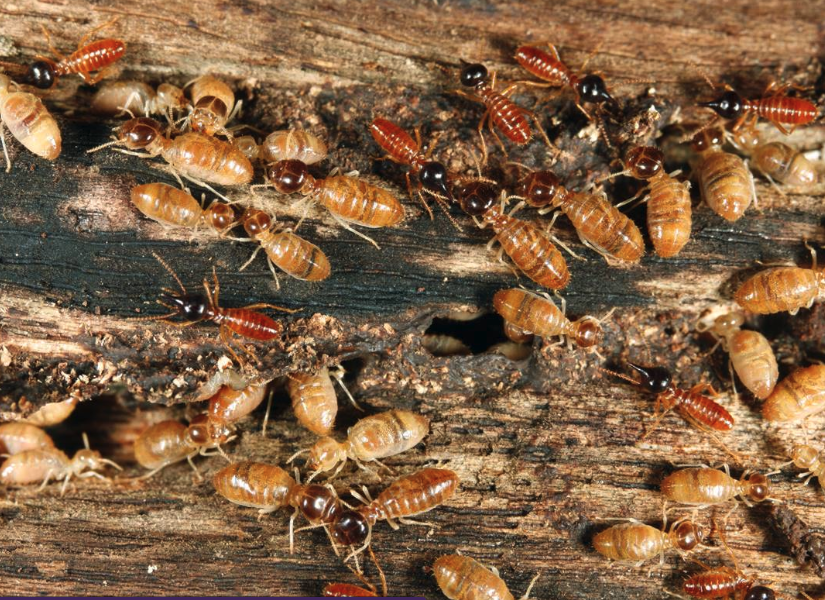
Worker termites are the backbone of the colony. They are blind, wingless, and soft-bodied, usually pale or creamy in color. Their duties include:
- Foraging for food such as dead wood, grass, leaf litter, and organic matter
- Feeding all other members of the colony, including soldiers, the queen, the king, and the young
- Building and repairing tunnels, chambers, and mounds
- Caring for eggs and newly hatched termites
Workers feed the colony by regurgitating partially digested food and by producing soft, nutrient-rich fecal pellets that other termites consume, allowing nutrients and vital gut microorganisms to circulate throughout the community.
A worker termite typically lives between 1 and 5 years, depending on species and environmental conditions. Though small and fragile, their collective effort shapes entire ecosystems.
2. The Soldiers (Protectors)
Soldier termites exist for one purpose: defense. They have large, hardened heads and powerful mandibles or chemical-spraying mechanisms used to fend off predators such as ants, lizards, birds, and mammals.
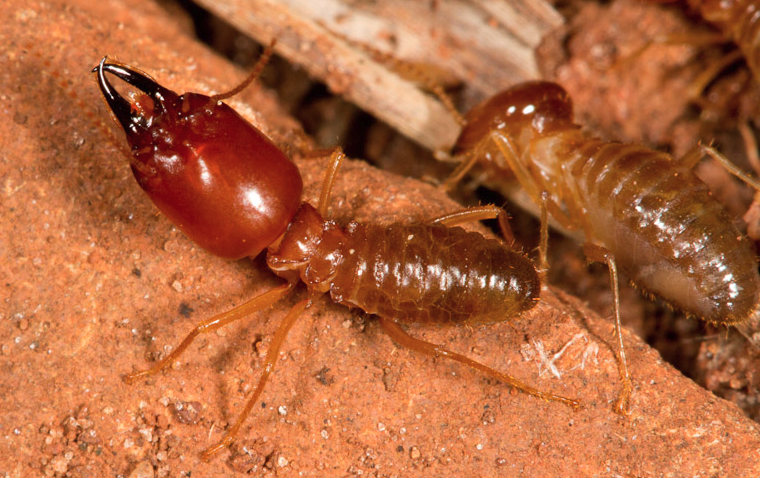
Soldiers cannot feed themselves. Their jaws are often too large to allow chewing, so workers must feed them. This complete dependence reinforces the interlinked nature of termite society.
Soldier termites generally live several years, often as long as workers, as long as the colony remains healthy.
3. The Winged Reproductives (The “White Ants”)
These are the termites most people recognize. When the rains begin, mature colonies release winged males and females called alates. They swarm into the air in massive numbers, attracted to light and moisture.
This is the stage that people collect and eat. Nutritionally, these termites are rich in protein, fats, and minerals, making them an important seasonal food source in many Ugandan communities.
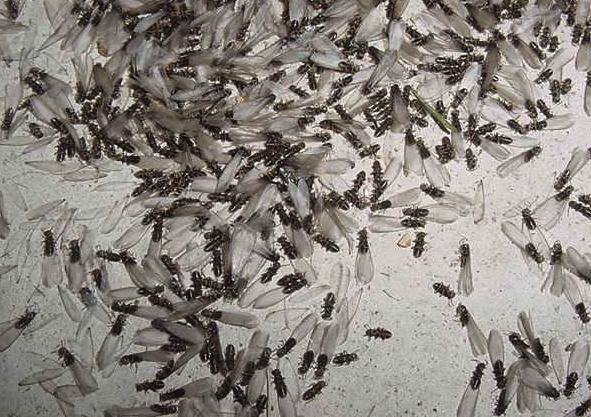
However, their true purpose is reproduction.
After swarming, alates shed their wings and pair up. Most will be eaten by birds, lizards, frogs, or humans. Only a tiny fraction survives to start new colonies.
The Royal Story: The King and the Queen
When a male and female alate successfully pair, they search for a suitable place underground or within soil to establish a new colony. They dig a small chamber, seal themselves inside, and begin a remarkable journey that may last decades.
At first, the king and queen do everything themselves:
- The queen lays a small number of eggs
- The king fertilizes them
- Both parents care for the eggs and feed the first hatchlings using stored body reserves
The first termites to hatch develop into workers. Once enough workers are present, the royal pair withdraws from all daily tasks. From this point onward, the workers take over feeding and care, while the king and queen focus entirely on reproduction.
As the colony grows, the queen undergoes a dramatic physical transformation. Her abdomen expands enormously, sometimes thousands of times larger than her original size, allowing her to lay hundreds to thousands of eggs per day, depending on the species. She becomes permanently immobile and remains housed in a protected royal chamber deep within the mound.
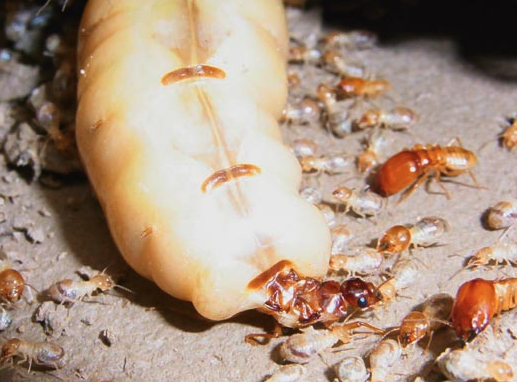
The king stays by her side for life, continuing to fertilize her eggs. This lifelong pairing is rare among insects and contributes to the long-term stability of termite colonies.
What Happens If the Queen Weakens or Dies?
Unlike many other social insects, termite colonies rarely collapse when a queen becomes weak, injured, or begins to lay fewer eggs. Termites also do not typically kill their queen.
Instead, the colony responds by producing replacement queens, known as secondary reproductives or neotenic queens. These queens develop from existing members of the colony and can:
- Assist an aging queen by co-laying eggs, or
- Fully replace her if she dies
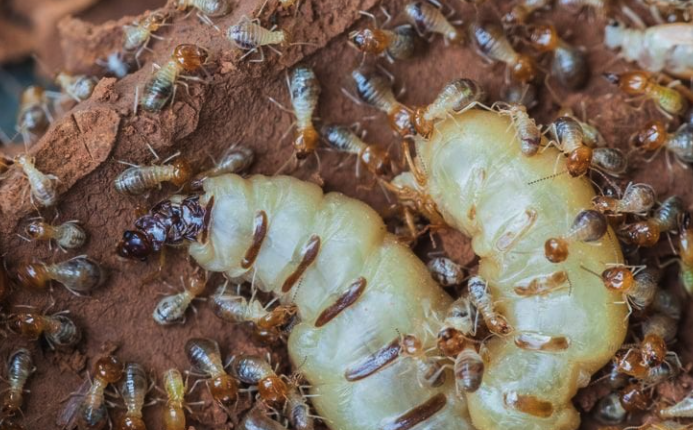
This ability allows the colony to maintain reproduction without disruption and can significantly extend its lifespan.
About the King
In many species, the original king continues to live and reproduce alongside the new queen or queens. In some cases, if the king dies, the colony can also produce replacement kings. This means a single termite colony may, at times, have:
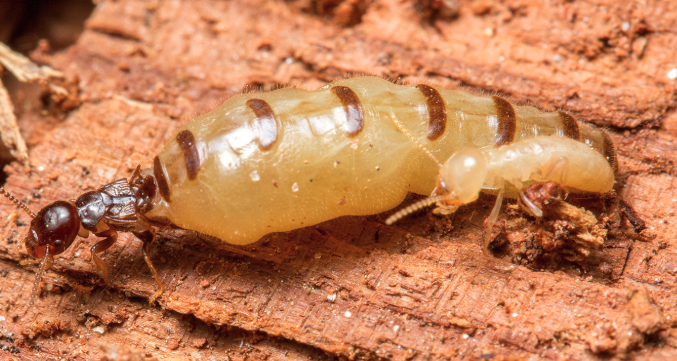
- One king and multiple queens
- Or replacement kings and queens working together
This flexible royal system is one of the reasons termite colonies are so resilient and long-lived.
Lifespan of Royalty
- A termite queen can live 15 to 25 years, and in some species even longer
- The king often lives just as long, sometimes for the entire life of the colony
This makes termite royalty among the longest-living insects on Earth and highlights why termite communities can persist for decades, even centuries, in stable environments.
Why This Matters
This cooperative and adaptive royal structure sets termites apart from other social insects such as ants and bees. Rather than relying on a single irreplaceable queen, termites build redundancy into their system, ensuring survival even under stress.
It is yet another example of how termite societies are designed not for speed or dominance, but for endurance.
How Long Can a Termite Community Live?
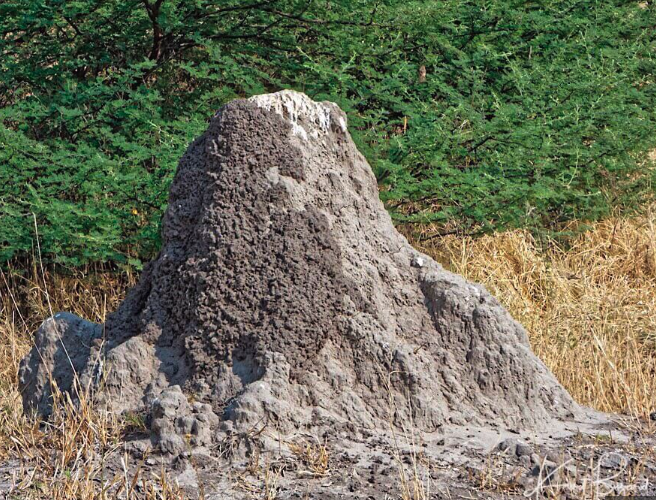
A termite colony is not a short-term settlement. Well-established colonies can persist for decades, sometimes over 50 years, as long as their environment remains stable and food sources are available.
Some of Africa’s large termite mounds have been continuously occupied by successive generations of termites, with new kings and queens replacing old ones without the mound ever being abandoned.
Why Termite Colonies Are So Hard to Destroy
Many people attempt to destroy termite mounds, especially when they appear near homes or gardens. Yet termites are notoriously difficult to eliminate completely.
This is because:
- The queen is deeply hidden and protected
- Colonies have multiple tunnels and chambers
- Workers can quickly repair damage
- Some species establish satellite colonies
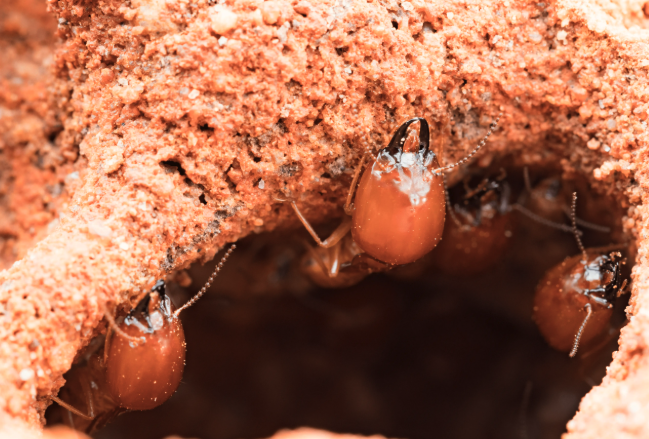
Destroying the visible mound does not necessarily kill the colony. In many cases, termites simply rebuild or relocate. Chemical treatments may kill workers but fail to reach the queen, allowing the colony to recover.
From an ecological perspective, this resilience is not a flaw; it is a feature that ensures termites continue performing their environmental roles.
Termites and the Environment: Silent Ecosystem Engineers
Termites are often called ecosystem engineers because their activities physically shape the environment.
Soil Fertility
By breaking down dead plant material and mixing organic matter into the soil, termites:
- Improve soil structure
- Increase nutrient availability
- Enhance water infiltration
Termite mounds are often richer in nutrients than surrounding soil. Farmers have long observed that crops grow better near old termite mounds.
Carbon Recycling
Termites play a key role in decomposing cellulose, returning carbon and nutrients back into the ecosystem. Without them, dead plant material would accumulate, slowing nutrient cycles.
Supporting Wildlife
Many animals depend directly or indirectly on termites:
- Aardvarks, pangolins, birds, reptiles, and primates feed on them
- Abandoned termite mounds provide shelter for snakes, warthogs, mongooses, and even lions
- Vegetation growing on termite mounds attracts grazers
In savanna ecosystems, termite mounds act as biodiversity hotspots.
Conclusion
While termites can damage buildings when natural habitats are disrupted, their presence is not inherently negative. Problems often arise when human development ignores ecological balance.
Understanding termite behavior allows for smarter construction, land use planning, and conservation strategies that reduce conflict while preserving their ecological benefits.
For tourism and conservation landscapes, termites are not pests; they are indicators of healthy ecosystems.
The next time winged termites fill the air after rain, it is worth remembering that you are witnessing one of nature’s most successful survival strategies. What most people call white ants are ambassadors of renewal, expansion, and resilience.
They are farmers of fungi, builders of cities, recyclers of forests, and food for both people and wildlife. Long before humans shaped the land, termites were engineering it.
At JT Safaris, understanding wildlife goes beyond the big animals. It includes the small, often overlooked species that make ecosystems function. Termites remind us that conservation is not only about what we admire, but also about what quietly sustains life beneath our feet.
In appreciating termites, we gain a deeper respect for the land we depend on, and the intricate systems that keep it alive.
Author: Kaima Sheira