They are the phantoms of the undergrowth, elusive, ancient, and fighting a secret battle for survival. That fleeting shadow is the mark of Africa’s master escape artist, an antelope whose very name comes from the Afrikaans word “duiker,” meaning “to dive.” This is more than a name—it is a testament to their core survival strategy: a single, explosive leap that propels them into the brush, where they seem to dissolve completely.
The Three Families of the Shadow
This elusive behavior is shared, yet perfected, across three distinct genera, each a master of a different realm. Within these groups, individual species have carved out unique niches across the African continent.
Cephalophus (The Forest Guardians)
Specialists of the deep rainforest, this genus represents the classic duiker. These small- to medium-sized antelopes, cloaked in reddish to dark coats, move like ghosts through the dense understory.
This diverse group includes:
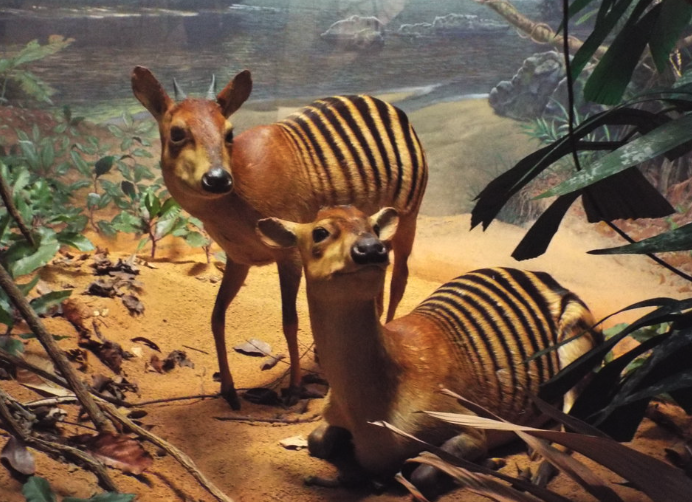
The Zebra Duiker: Instantly recognizable by its unique dark and light vertical stripes, this species is native to the fast-disappearing Upper Guinean forests of West Africa.
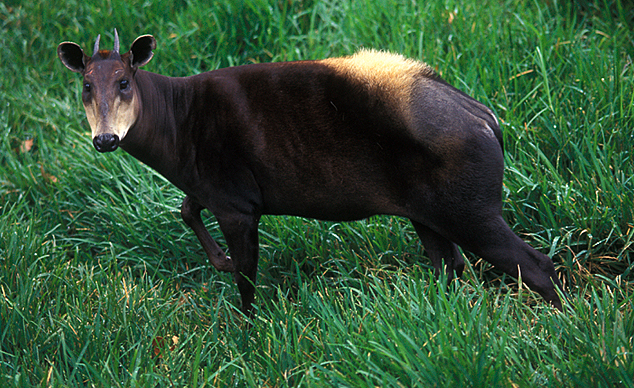
The Yellow-backed Duiker: The giant of the family, marked by a vivid, erectile patch of whitish-yellow to orange hair on its back. It dominates the primary tropical rainforests of Central and West Africa.
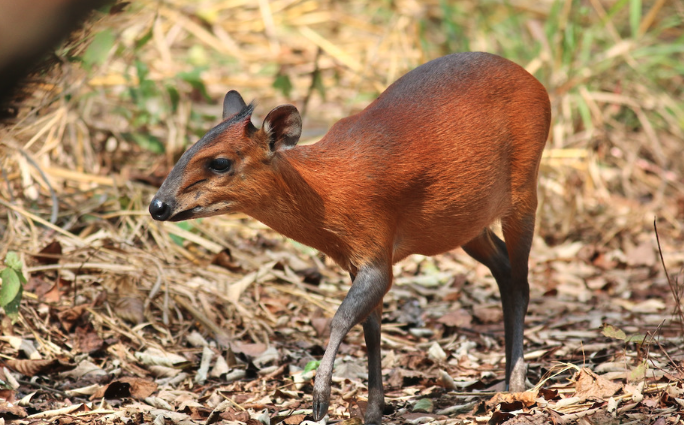
The Red-flanked Duiker: A widespread and resilient species known for its exceptionally large preorbital scent glands, which it uses intensively to mark territory in both forests and open woodlands.
Other secretive species include the high-altitude Rwenzori Duiker and the widespread Natal Red Duiker.
Philantomba (The Delicate Dwellers)
The smallest of all duikers, members of this genus are embodiments of elegance and delicacy. They flit through forests and thickets like living sunlight. A key social trait that sets them apart is their tendency to form monogamous, territorial pairs.
The Blue Duiker: The smallest of all duiker species, known for its slate-gray coat and buzzing calls. It is a master of the forest undergrowth throughout Central, Western, and Eastern Africa and is often seen following troops of monkeys to scavenge dropped fruits.
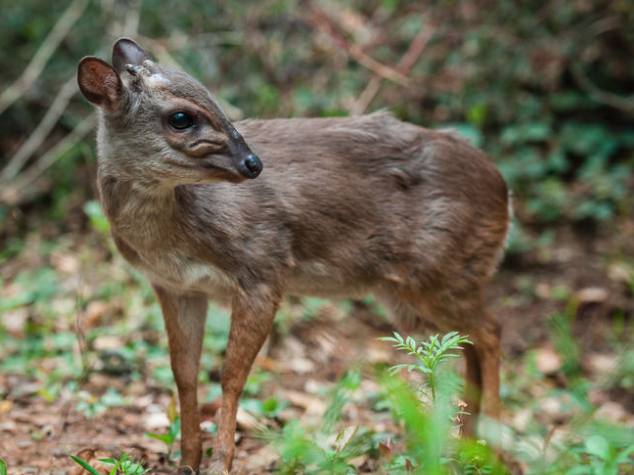
Maxwell’s Duiker: A species found primarily in the forests of West Africa.
Walter’s Duiker: A more recently described species honoring French zoologist Walter Verheyen.
Sylvicapra (The Savanna Sentinel)
Standing apart from its forest-dwelling cousins, the Common Duiker (Sylvicapra grimmia) is a specialist of the open country.
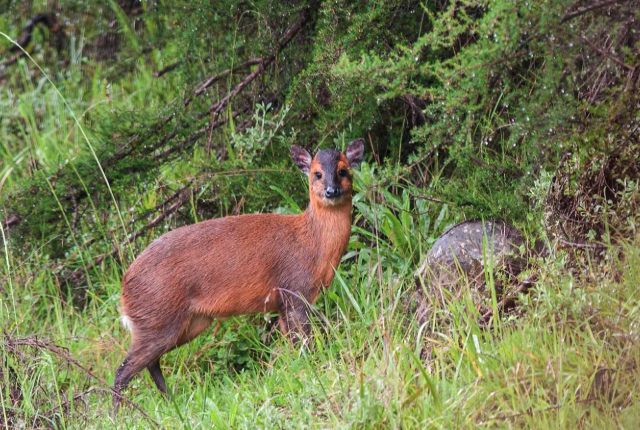
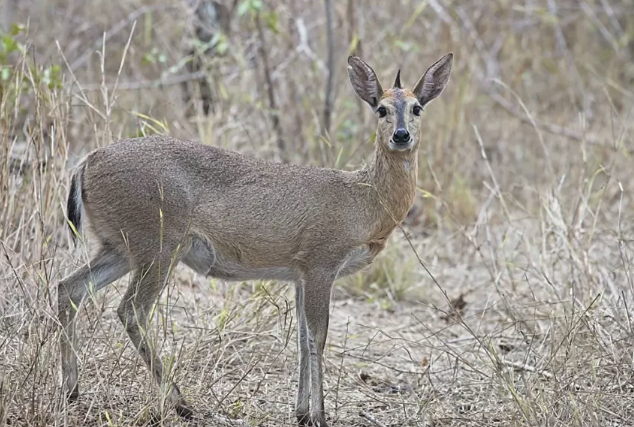
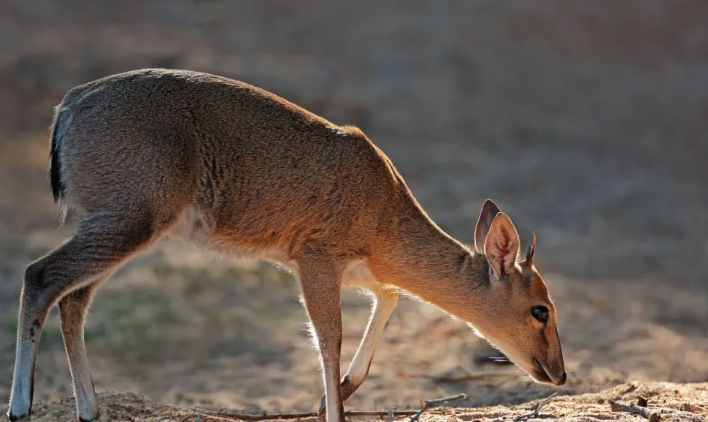
The Common (Grey) Duiker: A larger, long-legged antelope built for speed and endurance across the exposed savannas and bushlands of Eastern and Southern Africa. It exhibits unique adaptations such as reversed sexual dimorphism (females are larger) and is a highly adaptable omnivore, consuming plants, insects, small reptiles, and carrion. When startled, it is known for its characteristic zigzag running pattern.
A Special Note on a Rare Species
Ader’s Duiker: This small and endangered duiker has a highly restricted range in coastal East Africa. Research has revealed a unique behavioral pattern: on Mnemba Island, duikers are loosely crepuscular, with males most active in the morning and females in the evening.
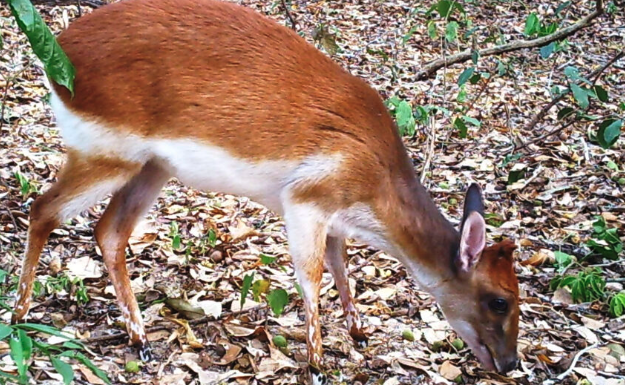
Distribution across the continent
From the dense, humid heart of the Congo Basin to the sun-drenched savannas of the south, duikers have carved out a home across sub-Saharan Africa. In Central and Western Africa, they are quintessential creatures of the rainforest. Taï National Park in Côte d’Ivoire stands as a key sanctuary, protecting one of the last remnants of primary Upper Guinean rainforest and hosting an exceptional diversity of duikers, including the elusive Jentink’s duiker and the strikingly patterned banded (Zebra) duiker. Moving to Eastern Africa, in countries like Uganda, duikers inhabit a mosaic of forests and national parks. They are confirmed residents of the famed Bwindi Impenetrable National Park, as well as the forests of the Rwenzori Mountains, Queen Elizabeth National Park, and Mgahinga Gorilla National Park. Further south, in Southern Africa, species like the Blue Duiker and the highly adaptable Common (Grey) Duiker inhabit the coastal and scarp forests of countries like South Africa and Mozambique, with the Common Duiker also thriving in the region’s open savannas and bushland.
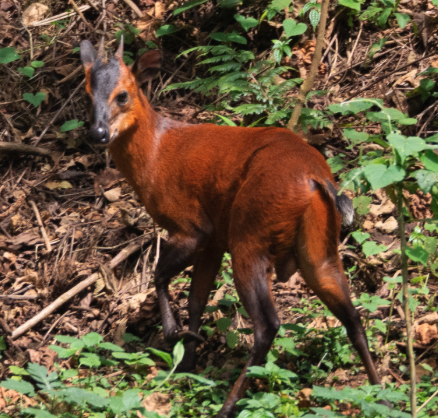
A Life Designed for the Disappearing Act
The solitary nature of the duiker is a finely honed survival strategy. It minimizes conflict, protects food sources, and, most crucially, aids in evading predators. They are true masters of camouflage, spending hours perfectly still in thick vegetation before vanishing with their signature “dive” at the slightest threat.
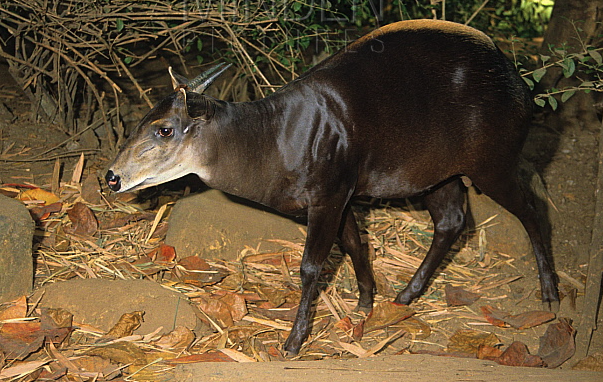
While forest species rely on stealth within dense cover, savanna sentinels such as the Common Duiker depend on speed across open landscapes. Despite their widespread presence, the secretive lives of duikers remain largely a mystery; much of what we know comes from studying only a handful of species, leaving the full stories of most duikers still whispered in the underbrush.
Physical Adaptations: Engineered for Survival
The duiker’s remarkable physical form is a perfect demonstration of evolution in action, with its body precisely engineered for its specific environment. This is most clearly seen in the division between two main ecological groups: the forest duikers and the savanna duiker.
Forest Dwellers: Masters of the Thicket
Species like the Blue, Red Forest, and Yellow-backed Duikers are built for life in dense vegetation. They possess a characteristic low-slung, compact body, short horns, and a wedge-shaped head. This streamlined profile functions as an organic key, allowing them to dive and navigate effortlessly through the tightest tangles of undergrowth, vanishing from predators in an instant.
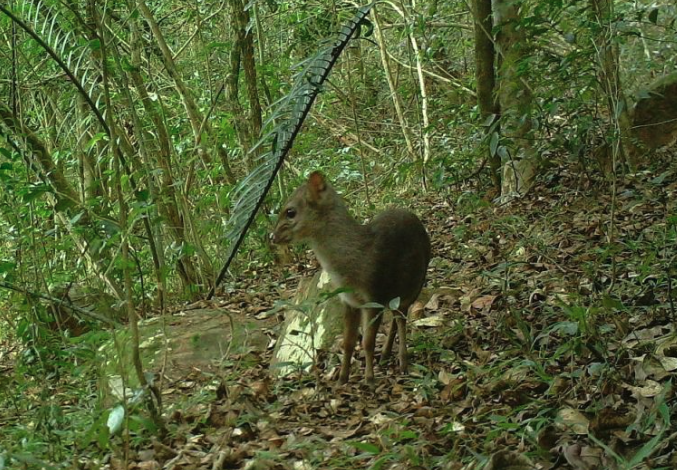
Their vast size range—from the 3 kg Blue Duiker to the 70 kg Yellow-backed Duiker—further reflects adaptations to different dietary niches within the forest.The Savanna Sentinel: Built for Open Space
In stark contrast, the Common (Grey) Duiker is built for the exposed savannas and bushland. It is the group’s specialist for open country, trading a compact form for longer legs built for speed and endurance over longer distances. This species also exhibits a unique reversal of typical sexual dimorphism, where females are larger than males and usually lack horns.
The Scent-Based Society: Leadership Without a Leader
In the dense undergrowth where duikers live, visual contact is rare. Their social structure has evolved not around visible hierarchy or group leadership, but through a sophisticated system of scent-based communication that maintains order and social bonds while minimizing confrontation.
The Architecture of Scent Communication
Duikers employ a multi-layered system of scent marking using specialized glands:
Preorbital Glands (Status Markers): These facial glands secrete a sticky substance that acts as a personalized chemical signature. When rubbed on twigs or logs, they leave detailed messages about identity, reproductive status, and dominance level.
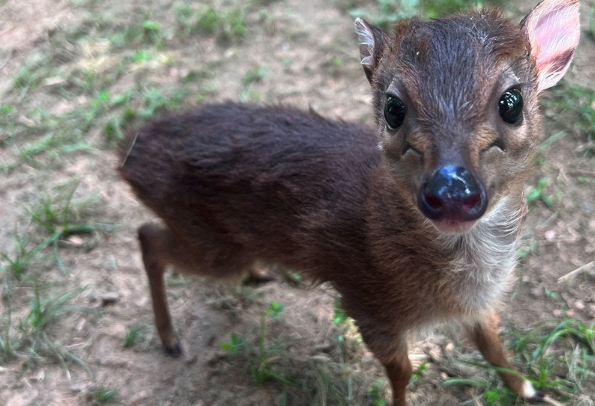
Pedal Glands (Perimeter Patrol): Located between the hooves, these glands deposit scent with every step, continuously reinforcing territorial boundaries like an invisible, scented fence.
Vocal Support: While scent is primary, duikers supplement their communication with vocalizations like bleats and grunts, particularly for immediate alerts or contact calls.
Social Structure Through Scent
This communication system defines their unique social organization:
Territorial Sovereignty: Leadership manifests as territorial control rather than command over followers. A dominant male governs his domain through vigorous scent marking, establishing dominance, and warning rivals without physical confrontation.
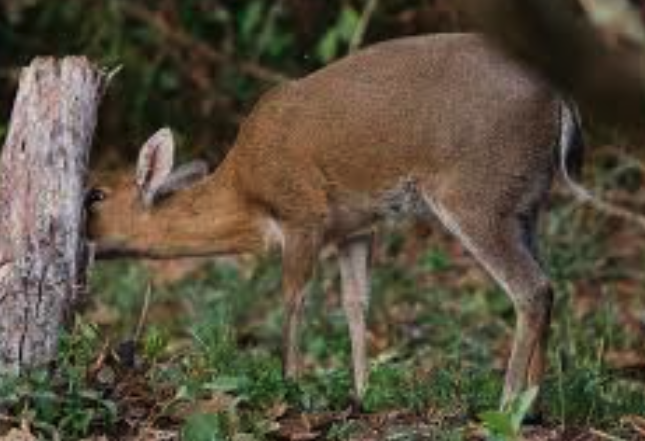
Varied Territorial Systems: Different species employ distinct territorial strategies. While Blue Duikers maintain exclusive, non-overlapping territories, species like the Red Forest Duiker show more flexibility with overlapping home ranges.
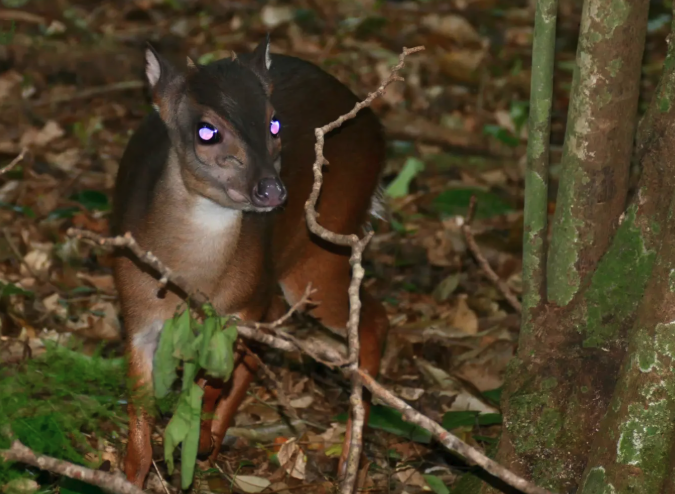
Social Contracts in Pairs: For monogamous species like the Blue Duiker, scent marking becomes a collaborative effort. Pairs jointly defend their territory and use gentle head-grooming and social marking to reinforce family bonds, creating the strongest social unit in the duiker world.
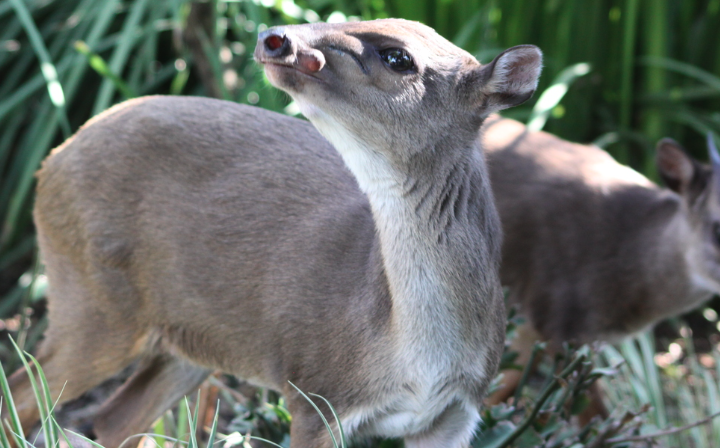
The Solitary Network: Despite their largely solitary nature, duikers exist within a stable social network maintained through scent. Individuals can assess rivals’ strength or potential mates’ readiness by “reading” scent messages, creating an orderly society without constant visual contact.
In essence, duiker society represents a sophisticated chemical governance system where territory equals authority, and the most influential individuals are those whose scent communicates most effectively across the forest floor.
Diet and Feeding Habits
Duikers are primarily browsers rather than grazers, eating leaves, shoots, seeds, fruit, buds, and bark. They often follow flocks of birds or troops of monkeys to take advantage of the fruit they drop.
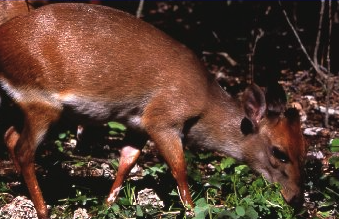
Furthermore, they supplement their plant-based diet with meat; duikers may consume insects, carrion, and even manage to capture rodents or small birds, making them omnivorous. Their large mouth allows them to feed on sizable fruits and other bulky items.
Reproduction and Life Cycle
Outside of reproduction, duikers are solitary. Their courtship involves prolonged and noisy chases before mating. The gestation period lasts between 5 and 8 months, after which a single calf is born. The calf can run within hours of birth; however, it typically lies hidden for long periods between suckling, a strategy to avoid predators.
The young utter a loud bleat when in danger, quickly signaling adults in the area. The male’s primary duty is to defend the territory, and he has no involvement in raising the offspring, which are cared for solely by the female.
The Circle of Life: A Duiker’s Journey Through Time
In the wild, a duiker’s life is a testament to resilience, intricately woven into the fabric of the African ecosystem. Their lifespan, typically ranging from 5 to 12 years, is a natural rhythm dictated by their role as both forest gardeners and a vital food source for predators.
Their years are spent in a dynamic balance. As prey for leopards, eagles, and pythons, they are a crucial link in the food chain; their presence is essential for the health of the forests and savannas they inhabit. This natural pressure, alongside seasonal changes in food availability, shapes a life that is shorter but full of purpose within the complex web of life.
In the absence of these natural pressures, such as in the protected environments of conservation centers, duikers have the potential to live longer, often reaching 15 to 20 years. This extended lifespan is not an artificial extension but the realization of their full biological potential when sheltered from predation and scarcity. It allows for invaluable observation, helping us understand their needs to better protect their wild cousins.
Ultimately, whether a duiker lives a decade in the dappled forest light or two decades under human care, its life remains a measure of the environment it calls home—one a vibrant, challenging tapestry of nature, the other a peaceful sanctuary preserving its legacy.
The Growing Threats to Duikers
Across Africa’s forests and savannas, the duiker’s world is growing quieter. These small antelopes face an onslaught of human-driven threats that push them toward silent extinction, with the survival of specialized species hanging in the balance.
The Triple Threat to Survival
The crisis stems from three interconnected pressures that form a perfect storm against duiker populations:
The Snare Wire’s Grip: Commercial bushmeat hunting has replaced traditional subsistence practices, creating a widespread trade that targets duikers as primary victims. Indiscriminate wire snares transform forests into fields of silent suffering, trapping not only duikers but countless other species in their painful grip.
The Shrinking Realm: As human demands grow, duiker habitats are systematically carved apart. Forests are cleared for agriculture and timber, while road networks slice through territories, creating deadly barriers and opening once-remote sanctuaries to further exploitation. This fragmentation leaves duikers with diminishing space to hide, feed, and breed.
The Genetic Trap: For rare species like the critically endangered Aders’s Duiker, small and isolated populations face the invisible threat of genetic erosion. Without sufficient numbers and territory connectivity, inbreeding depression weakens their resilience, pushing them closer to local extinctions.
While adaptable species like the Common Duiker demonstrate remarkable resilience, the future appears particularly bleak for forest specialists with limited ranges. Their continued existence now depends on our commitment to protecting their remaining strongholds and restoring the wild corridors that connect their fragmented worlds.
How Duikers Coexist and Face Threats
Duikers have evolved clever strategies to share their environment and avoid competition:
Niche Separation: In forests where multiple species live together (sympatry), they separate themselves by body size (which limits diet), activity patterns (nocturnal vs. diurnal), and micro-habitat preference (e.g., swampy forest vs. dry forest). For example, in Gabon, the bay duiker is nocturnal, while the similarly sized Peter’s duiker is active during the day.
Conservation Status
The conservation status of duikers varies by species, but they face common threats. Habitat loss and fragmentation resulting from human expansion and agricultural activities are significant challenges. They are also hunted for their meat, skins, and horns, which are sometimes used as charms. Consequently, some species, like the Ader’s duiker, are critically endangered, with only a few thousand individuals remaining. Conservation efforts include setting aside protected spaces like wildlife corridors and developing conservation tourism that provides sustainable income for local communities.